Commercial Certainty: Turnkey Delivery for Multi-Tenant Assets
20 February 2026

Lionel Allpress, Head of Marketing
Picture the moment a multi-tenant commercial steel building project starts to unravel. The drawings are finalised, the builder has priced them, and the variations are already coming in. The architect did not consult the builder on buildability.
The engineer specified to the drawings, not to what can actually be fabricated efficiently. Three parties. Three contracts. And the developer holding the cost exposure from every gap between them.
This is not an unusual project. It is the default outcome of fragmented delivery.
Steelcorp's Design and Construct model is built around removing the conditions that produce it.
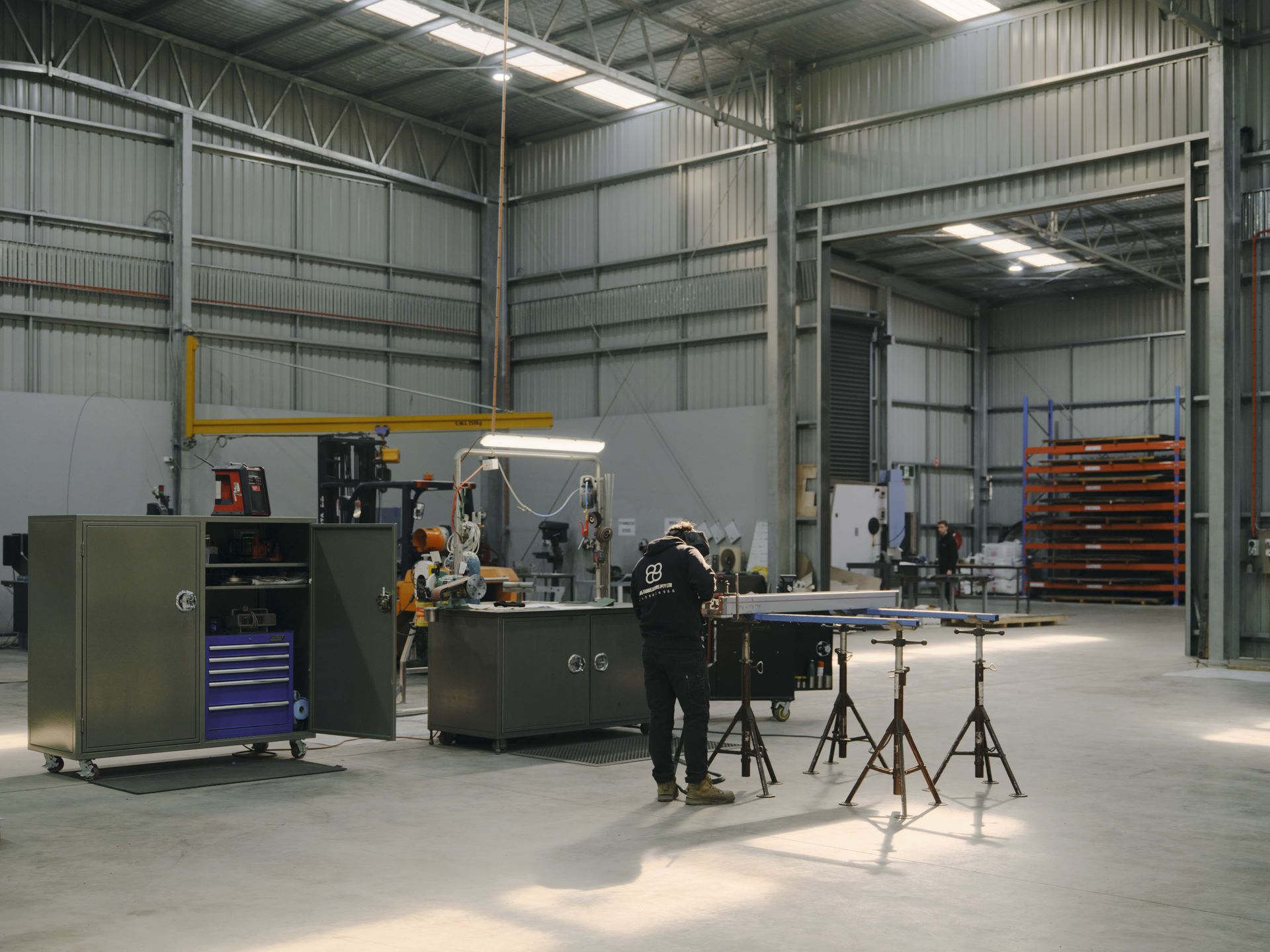
One team manages design, engineering, fabrication, and construction under a single contract. There is no gap between disciplines for risk to fall into.
The Problem with Coordinating Multiple Parties
Multi-tenant commercial assets are more complex to deliver than single-tenancy buildings. Bay configurations, fire compartmentation requirements, shared loading access, future subdivision potential, each of these involves decisions that affect structural design, and structural design affects cost. When those decisions are distributed across separate parties who are not communicating in real time, they get made sequentially rather than collaboratively.
The architect finalises the layout. The engineer designs around it. The builder prices it and identifies the problems. By then, the design is locked and changes are expensive. The developer, who has the most to lose from this sequence, has the least control over it.
What a Single Contract Actually Changes
A turnkey D&C contract does not simply consolidate your invoices. It consolidates accountability. When design, engineering, fabrication, and construction are managed by the same party, there is no argument about who is responsible for a problem. Steelcorp owns the outcome, and you can see what that accountability looks like in practice across our completed
project portfolio.
Design Decisions Get Made Once, Not Twice
Our in-house engineering team works alongside our design team from the first site visit. There is no handover between them, no lag between a design decision and its structural and cost implications. When a column grid is proposed, the engineer evaluating it and the fabricator who will produce it are in the same conversation. Decisions that would otherwise generate variations on site are resolved at design stage at zero cost.
Fabrication Starts From an Optimised Design
Because our engineers work with our design team rather than after them, the design that enters fabrication has already been tested for buildability and structural efficiency. We reduce structural steel compared to standard engineering approaches by designing to what the structure actually needs, not to a conservative generic specification. Lighter frames require less intensive footings, which reduces your civil cost and brings the programme forward.
Approvals Are Managed As Part of the Programme
As your D&C partner, we prepare the engineering documentation required for your building permit. This is not a task we hand off to a separate consultant. It is part of our delivery scope, built into your programme from day one with realistic timeframes, not optimistic assumptions.
How We Engage Before the Design Is Set
The most financially significant work on a D&C project happens before any drawing is produced. This is where Steelcorp's 42-point discovery process operates. Before we design anything, we need to understand the full technical, environmental, and commercial picture of your project.
For multi-tenant assets, this includes fire compartmentation requirements under the National Construction Code, tenancy subdivision options, dock and hardstand configurations, and future expansion provisions. Identifying these requirements at the outset means they are designed for, not retrofitted. Retrofitting is expensive. Discovery is not.
Early Contractor Involvement (ECI) is where most developers in the fragmented model leave value on the table. Bringing a builder in after the design is locked forfeits every efficiency that early collaboration would have produced. We engage before the design is finalised, which is the only point at which those efficiencies are still accessible. Learn more about
how we work and the team behind this process.
Designing for Multi-Tenant Performance
The value of a multi-tenant commercial asset depends on who it can attract as tenants and how long it can retain them. We design with the end user in mind, which means the structural decisions made during the design phase are evaluated against their long-term operational implications, not just their upfront cost.
Column Grids That Adapt to Changing Tenancy
Our structural grids are designed to support a range of tenancy configurations from the outset. A bay that is leased as a single large unit today can be subdivided when your tenancy mix changes. An asset that can accommodate different tenancy types and sizes over its life maintains its yield potential as the market evolves. This is a design decision that is straightforward to make at the right time and expensive to retrofit later.
Clearance Heights That Attract the Right Tenants
Modern commercial and light industrial tenants prioritise usable internal volume, not just floor area. Minimising internal columns and delivering appropriate clearance heights for the target tenant profile makes the asset more competitive in the rental market and more resilient to changing operational requirements. We specify clearance heights based on what the asset needs to attract and retain, established during the discovery process.
A Structure That Presents Professionally
A commercial building that presents well attracts better tenants at stronger rents. Our design team works within your architectural brief to deliver a structure that is efficient to build and considered in how it presents. Structural efficiency and good design are not in conflict when they are developed together from the beginning.

"Maximising land yield requires smart structural engineering.
We specialise in multi-level designs that turn expensive plots into high-density assets."
The Programme and Cost Outcome
Every week between practical completion and the first rent payment is a week of holding cost. Interest on construction finance accrues daily. A programme that overruns by four weeks on a significant project is a meaningful cost to the feasibility.
Our integrated process eliminates the inter-party handover delays that extend programmes in fragmented models. Fabrication, approvals, and site works are coordinated internally. Every Steelcorp structure is backed by a lifetime structural warranty, a reflection of the engineering rigour behind each build, and a stronger position when presenting the asset to financiers or future buyers.
If you are ready to discuss a multi-tenant project,
contact our team to begin the discovery process.